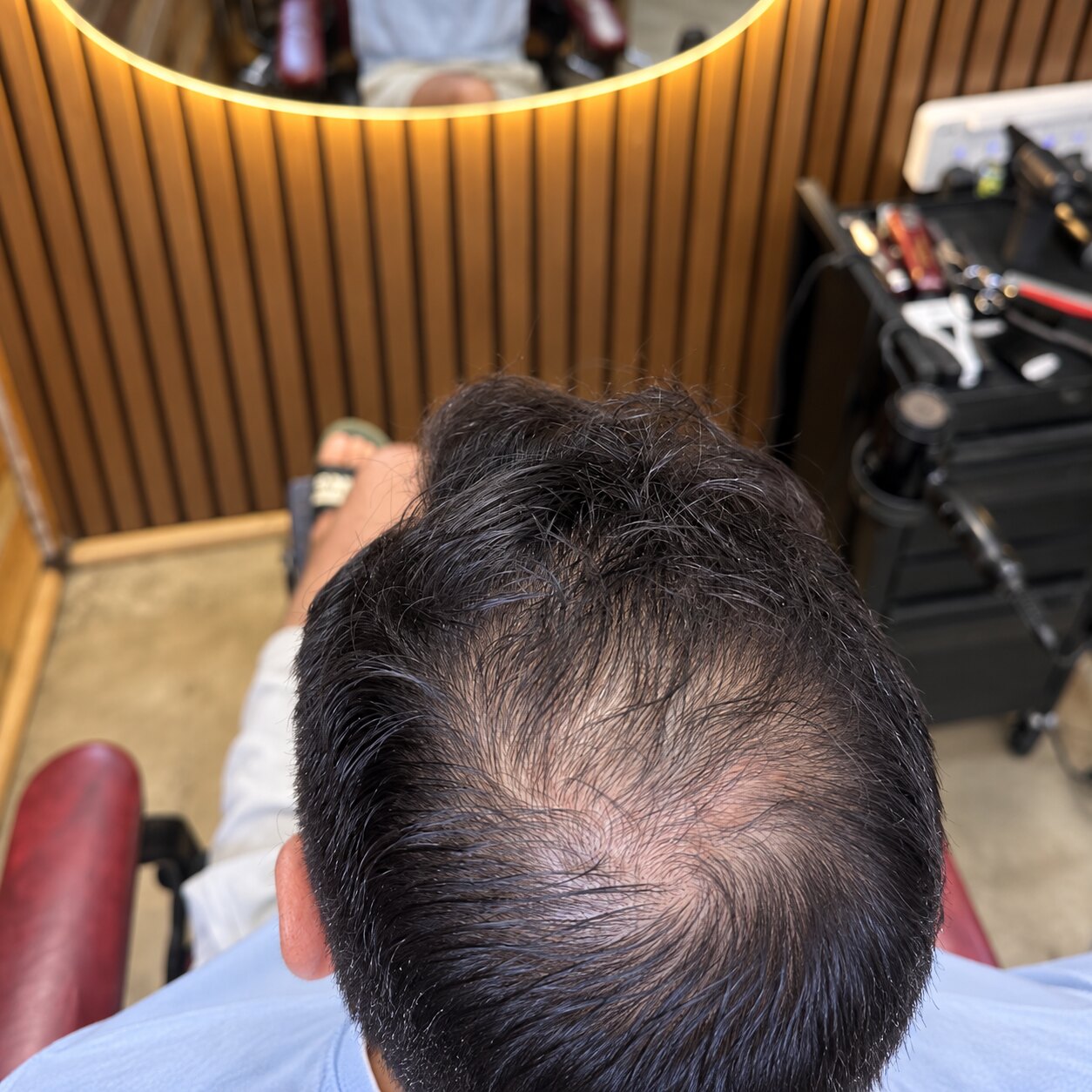
Hair loss and thinning are common, and they can happen for several reasons. Some causes are temporary, while others are linked to genetics or health conditions. Understanding the likely cause is the first step towards getting the right advice.
1. Genetics and ageing
The most common type is pattern hair loss. It is influenced by genes and hormones and usually develops gradually, often appearing as a receding hairline or thinning around the crown.
2. Stress, illness and hormonal changes
Major stress, fever, surgery, rapid weight loss or hormonal changes can push more hairs into the shedding phase. This is often temporary, but noticeable shedding may begin weeks or months after the trigger.
3. Health conditions and medicines
Thyroid problems, iron deficiency, autoimmune conditions and some medicines may contribute to hair loss. A GP or dermatologist can help identify these causes and recommend appropriate tests or treatment.
4. Hair damage and tight styles
Frequent bleaching, excessive heat and hairstyles that constantly pull on the roots can weaken hair or cause traction alopecia. Gentle grooming and reducing tension can help protect the hair and scalp.
5. Alopecia areata
Alopecia areata is an autoimmune condition that often causes smooth, round patches of hair loss. Sudden or patchy hair loss should be assessed by a healthcare professional.
When should you seek advice?
See a GP or dermatologist if hair loss is sudden, patchy, painful, itchy, accompanied by scalp changes, or affecting your wellbeing. A barber can notice changes in the hair and scalp, but cannot diagnose or treat a medical condition.
At Tapper Don Barbershop in Rosebery, we can recommend a haircut that works with your current hair density and helps you feel confident while you seek professional advice if needed.
This article provides general information and is not a substitute for medical advice.